|
Earliest meeting: Wednesday 19th March 1890
Final meeting: Wednesday 10th October 1962
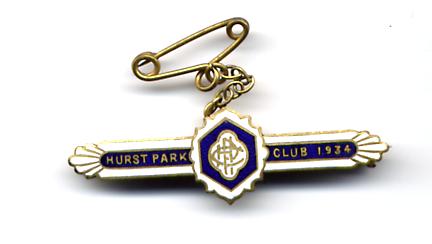
In 1887 Hampton Racecourse closed for the final time after the Jockey Club refused to renew its licence. It was not a closed Park course, like its near neighbours Sandown Park and Kempton Park, and was therefore more difficult to maintain. A group of local businessmen spotted an opportunity and formed the Hurst Park Club Syndicate Limited in 1889, with the sole intention of buying the old Hampton site and developing a closed course. This they did, but the problem was it was too small for Flat racing and only operated for a short time. Not to be deterred, they purchased nearby meadowland and extended the course to ensure that the Jockey Club would issue a licence to host Flat meetings. The first meeting to take place on Hurst Park, the replacement for Hampton Court Racecourse, was on Wednesday 19th March 1890 for a National Hunt meeting and Wednesday 25th March 1891 for a Flat race meeting. The course was situated near to Hampton village on the Thames, approximately 12 miles from London, and was an oval course of 11 furlongs with a special 'Victoria Cup' course of 7 furlongs. By the turn of the century the course was hosting top class racing and attracting the best horses. In 1901 the Derby winner Volodyovski was beaten by the Duke of Portland’s William the Third. The principal race was the Victoria Cup, a fiercely competitive handicap which was first contested in 1901 when won by Sweet Dixie. Racing ceased from 1916 to 1918 for the First World War, and there was no racing from 1940 to 1945 when the course was used as a military camp for the Second World War. To recognise the significant part Winston Churchill had played in securing victory in the war, the Winston Churchill Stakes was first run in 1946 when won by Preciptic, owned by the Maharajah Gaekwar of Baroda. Winston Churchill visited the racecourse on a number of occasions, but his most exciting visit was in 1951 when his grey horse Colonist II won the Winston Churchill Stakes. The win was a very popular one and the course continued to be extremely well supported by the general public. However, the original venture was a business venture and the Company were keen to maximise their profit. They realised that the racecourse land was significantly more valuable as development land. Approval to build on the land was gained in 1961 leading to a final meeting on Wednesday 10th October 1962. |
 |